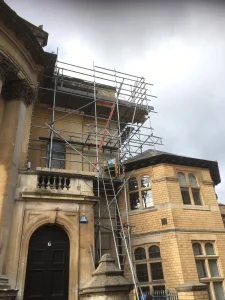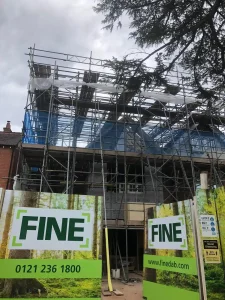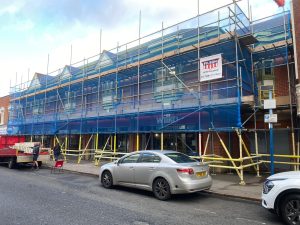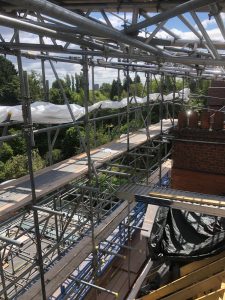
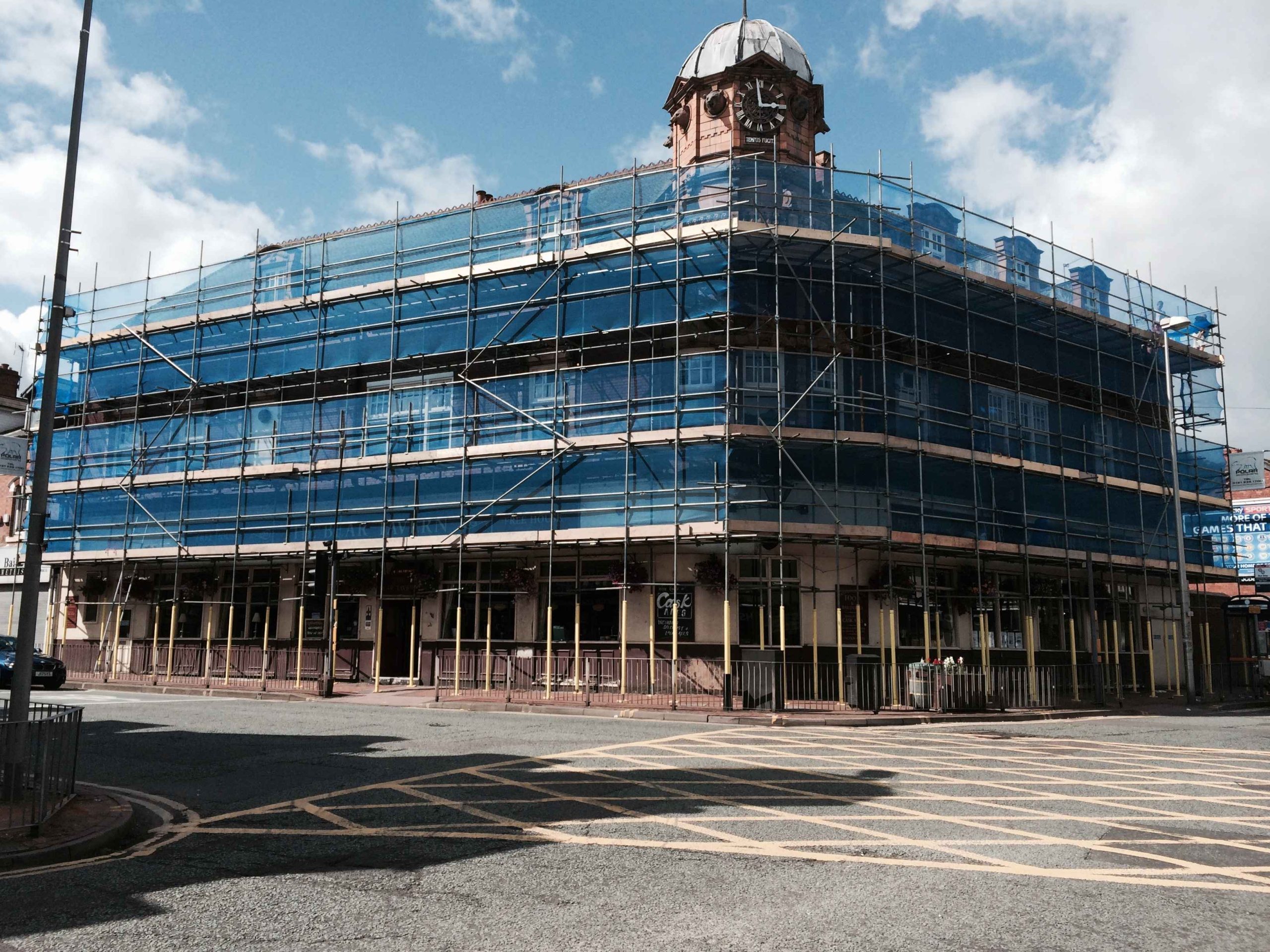
Rain hits scaffold boards along Digbeth High Street, B5, before crews even settle in. Work slows fast. Sometimes it stops altogether.
Birmingham projects feel this often. Sudden showers, wind gusts, and cold snaps interrupt progress without warning. Your timeline slips. Pressure builds. Retail sites don’t have breathing space.
A delayed shop fit-out means missed opening dates. That leads to lost footfall and stalled revenue. Every extra day costs money. Sometimes more than expected. You’re left chasing time.
Temporary Roof Scaffolding offers a way to stay in control. It creates a covered structure that shields your site from weather exposure. Work continues when conditions turn. That changes everything.
It also supports safer working practices. Regulations like WAHR expect you to manage risk properly. Covered systems help meet that expectation. You protect your timeline. And your bottom line.
Why UK Retail Projects Are Highly Vulnerable to Costly Delays
Weather disruptions and halted construction timelines
Across Birmingham, from Bullring B5 to New Street B2, retail construction rarely gets a clean run of weather. Rain arrives without warning. Wind picks up mid-shift. Work slows almost instantly. Progress becomes unpredictable.
Wet conditions affect materials and access. Scaffold boards become slippery. Tools need covering. Crews lose hours waiting for safe conditions to return. It adds up quickly.
A contractor working near Digbeth B9 told me they lost three full days in a single week due to repeated rain stoppages. That kind of disruption pushes timelines back without much control. You start falling behind.
Business impact on retail owners (lost footfall, revenue delays)
Retail projects run on fixed deadlines. Opening dates are planned around seasons, promotions, and lease agreements. A delay doesn’t just shift construction. It affects your entire business plan.
Revenue takes a hit. If a unit on Corporation Street B2 opens late, you lose early footfall. Marketing campaigns lose impact. Staff schedules become difficult to manage. The cost builds quietly.
You’re still paying rent. Contractors remain on site longer. Suppliers adjust delivery schedules. Every delay creates another layer of expense. Margins tighten.
Safety risks of continuing work in poor weather conditions
Working at height during poor weather creates real danger. Rain reduces grip on scaffold boards. Wind affects balance and stability. Cold conditions can stiffen materials and equipment. Risk increases fast.
The Work at Height Regulations 2005 require you to plan work safely. This includes assessing weather conditions before allowing work to continue. If conditions are unsafe, work should stop. That’s the legal expectation.
Ignoring this leads to accidents. Slips, trips, and falls become more likely. Even small mistakes can result in serious injury when working above ground level. It’s not worth the risk.
This is where many projects struggle. You either stop work and lose time, or continue and increase risk. Neither option works well without the right setup.
How Temporary Roof Scaffolding Solves Retail Construction Delays
Creating a controlled and weather-protected working environment
Retail sites across Birmingham, from Bullring B5 to Broad Street B1, face constant exposure during construction. Open structures leave materials and workers vulnerable to rain and wind. Conditions shift fast. That’s where Temporary Roof Scaffolding changes the setup.
It creates a covered structure above the working area. This roof system shields the site from direct weather exposure. Rainwater stays out. Wind impact reduces. Work zones remain stable. You gain consistency.
Materials stay dry. Timber, insulation, and internal fittings avoid moisture damage. Crews work without constant interruptions caused by sudden weather changes. It keeps the site usable.
Keeping projects on schedule despite external conditions
Retail timelines are tight in Birmingham city zones like New Street B2 or Digbeth B9. Delays affect opening dates and commercial plans. There is little room to recover lost time. The weather often becomes the main obstacle.
A scaffolding temporary roof system allows work to continue during poor conditions. Teams don’t need to pause for rain. Tasks move forward as planned. That continuity matters.
Instead of losing full days, progress continues in smaller controlled stages. Contractors maintain workflow. Deadlines stay achievable. You avoid falling behind.
Supporting compliance with UK safety expectations (WAHR, HSE, CDM)
UK safety rules don’t leave much room for guesswork. If you’re running a site in Birmingham, you’re expected to plan for risk before work even starts.
The Work at Height Regulations 2005 (WAHR) set that baseline. They require you to organise work at height so people don’t fall. That includes checking the weather before anyone goes up. Simple idea. Reduce the risk early.
The Health and Safety Executive (HSE) backs this up with site guidance. Wet boards increase slip risk. Strong winds affect balance. If conditions can’t be controlled, work should stop. That’s the reality on site.
Then you have the Construction (Design and Management) Regulations 2015 (CDM). These rules focus on planning and coordination. You’re expected to put measures in place that manage known risks before they become incidents. No shortcuts here.
This is where roof scaffolding systems fit in. It gives you a way to control conditions instead of waiting on them. You limit exposure to rain and wind, and you create a safer working area. You’re not reacting anymore. You’re prepared.
How Scaffolding Temporary Roof Systems Prevent Delays and Damage
Protecting materials, interiors, and ongoing structural work
Retail projects across Birmingham, from Grand Central B2 to the Mailbox B1, often involve exposed structures during refurbishment. Once roofing is removed or altered, the building becomes vulnerable. Damage starts quickly.
Rainwater seeps into timber, insulation, and electrical systems. Even short exposure can lead to material failure. Replacement becomes necessary, and costs rise without warning. You lose time and money.
A scaffolding temporary roof system creates a sealed covering over the working area. It prevents water ingress and shields unfinished interiors from weather exposure. Materials remain in usable condition. That protection matters.
It also reduces the risk of rework. When materials stay dry, contractors don’t need to undo completed sections. Progress continues without setbacks caused by damage. You avoid repeating work.
Minimising downtime caused by rain, wind, and exposure
Weather delays don’t always come as full stoppages. Often, they appear as slowdowns. Crews pause tasks, adjust equipment, and wait for safer conditions. Time slips away.
In areas like Digbeth B9 or Jewellery Quarter B18, where projects run on tight schedules, even a few lost hours each day create larger delays over time. It builds quietly.
A roof scaffolding allows work to continue in controlled conditions. Rain no longer forces teams off-site. Wind impact reduces within the covered structure. Tasks move forward without constant interruption. Momentum stays intact.
This continuity improves coordination across trades. Electricians, fit-out teams, and structural crews can work without waiting for weather clearance. Scheduling becomes more predictable. That’s the real advantage. Instead of reacting to the weather, you remove it as a factor.
Where Scaffolding Roof Systems Are Essential in Retail Projects
High street shop refurbishments
Retail refurbishments across Birmingham, especially along Corporation Street B2 and Digbeth High Street B5, often take place in active environments. Shops remain surrounded by foot traffic, neighbouring businesses, and tight working spaces. Access is limited.
A scaffolding roof system helps you manage that constraint. It creates a covered working zone above the shopfront, allowing internal and external work to continue without exposing the structure to rain. You keep control.
This matters during phased refurbishments where parts of the unit must remain protected while others are being upgraded. Without overhead protection, even short weather exposure can delay progress and damage finished sections. Timing becomes everything.
Shopping centre renovations
Large retail schemes in areas like Bullring B5 or Grand Central B2 run on strict schedules. Multiple contractors work across different sections at the same time. Coordination is tight.
A roof scaffolding system allows work to be divided into controlled zones. Each section stays protected while others progress, reducing the risk of one delay affecting the entire project. It keeps everything moving.
You also reduce disruption to surrounding units. Covered systems prevent debris and water from affecting adjacent retail spaces, which is critical in operational shopping centres. That’s often overlooked.
Roof repairs and structural upgrades
Roof-level work is the most exposed phase of any retail project. Once the existing structure is opened, the building becomes vulnerable to immediate weather impact. There’s no buffer.
A roof scaffolding setup provides continuous protection during repairs and upgrades. It allows structural work, insulation fitting, and finishing tasks to proceed without interruption.
This is where delays usually start:
- Sudden rain halts exposed roof work
- Wind is making access unsafe for crews
- Water damage is forcing material replacement
- Repeated setup and removal of temporary coverings
With proper overhead protection, these issues are reduced. Work continues under stable conditions, and scheduling becomes far more predictable. You remove uncertainty.
Key Benefits Retail Businesses Should Expect from Temporary Roof Scaffolding
Retail projects across Birmingham, from New Street B2 to Digbeth B9, operate under tight timelines and constant pressure to open on schedule. Delays don’t just affect construction. They impact revenue from day one. A roof scaffolding changes how your project performs.
It gives you control over conditions that usually cause disruption. Work continues without repeated stoppages. Teams stay productive, and materials remain protected throughout the build. You reduce uncertainty.
Here’s how that translates into real outcomes:
| Project Area | Without Protection | With the Temporary Roof System |
| Timeline control | Frequent weather delays | Consistent progress across all phases |
| Financial impact | Rising costs from downtime and rework | Better cost control and fewer disruptions |
| Site safety | Increased slip and fall risks | Safer working conditions under cover |
| Contractor efficiency | Stop-start workflow | Continuous and planned productivity |
This isn’t just about protection. It’s about keeping your Birmingham retail project moving without setbacks that quietly increase costs and extend timelines.
Choosing the Right Scaffolding Partner for Retail Projects
Retail construction across Birmingham, from Bullring B5 to the Jewellery Quarter B18, requires more than basic access solutions. You’re working around live environments, tight deadlines, and constant public movement. Mistakes show immediately.
A scaffolding roof setup only works if it’s planned and delivered correctly. The provider you choose has a direct impact on whether your project stays on track or slips into delay.
Here’s what you should look for:
- Experience working on active retail sites where public access cannot stop
- Planning that considers weather risks, access points, and phased construction
- Clear communication between site teams, contractors, and project managers
- Ability to adapt quickly when site conditions change
Each of these factors affects how smoothly your project runs. Filson Scaffolding works across Birmingham retail sites where timing and safety matter. Their approach focuses on practical planning, safe installation, and keeping disruption low while work continues.
The right partner doesn’t just install scaffolding. They help you avoid problems before they start.
Conclusion
Retail projects across Birmingham, from New Street B2 to Digbeth B9, run on tight timelines where even short delays affect revenue and opening plans. Once work falls behind, recovery becomes difficult and costly. You feel it quickly.
Temporary Roof Scaffolding gives you a way to manage that risk before it turns into a problem. It protects your site from weather exposure, keeps work moving, and supports safer working conditions throughout the build. That control matters.
Instead of reacting to delays, you plan ahead and remove the main cause. Early decisions around protection and access shape how smoothly your project runs.
Filson Scaffolding supports Birmingham retail projects with practical solutions that focus on safety, continuity, and reliable delivery. Need to keep your retail project on schedule? Speak to Filson Scaffolding today and get a tailored temporary roof solution.
Frequently Asked Questions
1. When should temporary roof scaffolding be used in retail projects?
Use it whenever the existing roof is opened up. If you are removing tiles, slats, or felt, you need a cover.
2. Does this type of roof system help meet UK safety regulations?
Yes. It provides a controlled environment. It helps you manage risk under WAHR and CDM. It keeps the public safe.
3. How does it reduce delays caused by weather?
It creates a dry workspace. Work continues in rain, snow, or wind. The project keeps moving.
4. Is this type of scaffolding suitable for active retail locations?
Absolutely. It can be designed to allow public access underneath. Shoppers can walk past while work happens above.