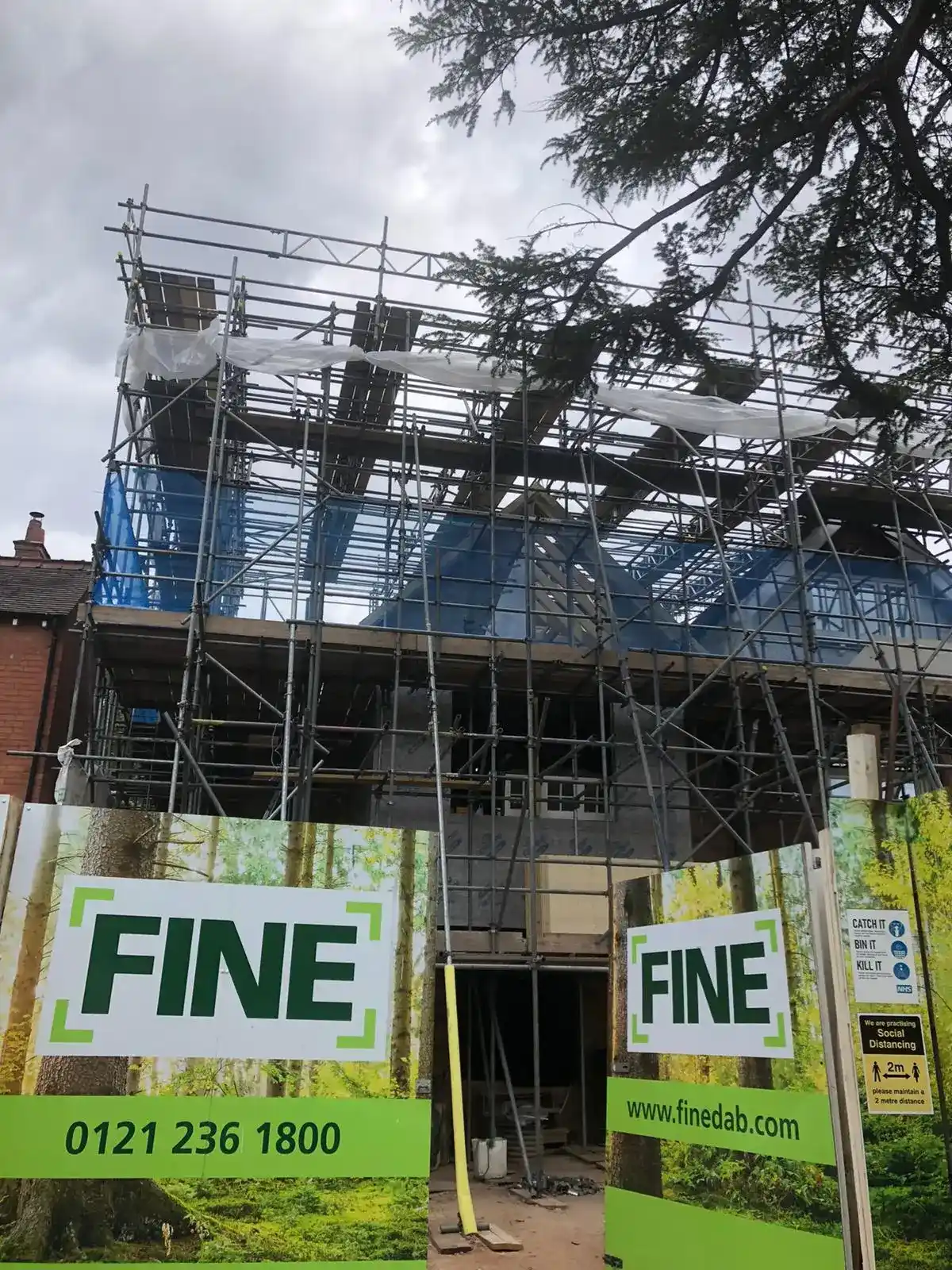
A Digbeth site manager once told me: “We lost two weeks in October. Rain got into the first fix timber on the second floor. We didn’t think we needed a roof. We were wrong.”
That’s not a rare story. Across B1, B5, and B18, the same pattern plays out every autumn. Weather moves in. Work stops. Costs climb. And no one planned for it.
The fix isn’t complicated. Temporary roof scaffolding keeps your site dry, your labour productive, and your programme intact. This article breaks down the risks of going without it, and why more contractors in Birmingham are treating it as standard, not optional.
Weather Stops Work. A Roof Doesn’t Have To.
Rain doesn’t care about your programme. Wind doesn’t negotiate with your client. And on an exposed site in Edgbaston or Selly Oak, that’s a real daily threat.
Stop Rain from Stopping Work
Every hour your team stands down costs money. Labour is still on the clock. Plant may still be hired. Overheads don’t pause.
A single day of weather delay on a mid-size commercial build can cost £2,000–£5,000 in lost productivity [source: verify against CITB or industry benchmarks]. Multiply that across a British autumn. The numbers aren’t comfortable.
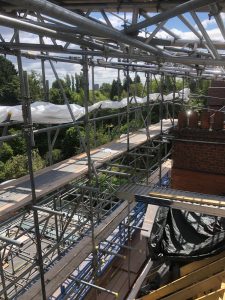
Temporary roof scaffolding eliminates that variable. Work carries on inside a protected envelope. Your programme stays honest.
Materials at Risk Every Day
Timber swells. Plasterboard crumbles. First-fix electrics suffer moisture damage that only shows up later, usually at commissioning, when it’s expensive to fix.
Material replacement is rarely just a supply cost. It means rework. More time. More labour. Sometimes more structural assessment. Protecting materials on site is protecting your margin.
Deadlines Slip. Costs Rise.
Contract penalties are one of the quietest killers on a commercial project. Two weeks of weather delay can push a completion date past a penalty clause. That’s a cost you didn’t quote for.
Client trust takes a hit, too. A delayed handover on a retail unit in Birmingham City Centre B3 doesn’t just affect this job, it affects the next conversation about the next project.
Why Temporary Roof Systems Are Becoming Standard Practice
Five years ago, temporary roofing was seen as a premium add-on. That thinking is shifting. Fast.
Not Just for Large Projects
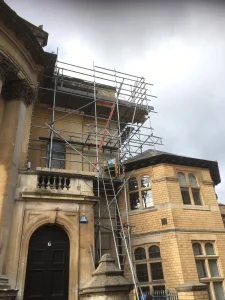
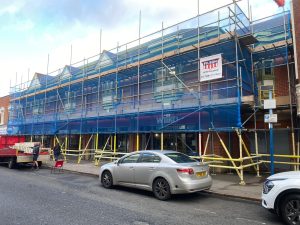
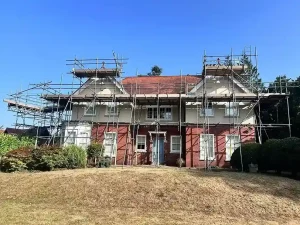
Contractors in Jewellery Quarter B18 and Selly Oak B29 are using temporary roofs on terraced refurbishments, commercial fit-outs, and mid-scale residential schemes. The scale of the build doesn’t change the risk from the weather.
If your project has exposed structural timbers, open roof decks, or ongoing external works during autumn and winter, a temporary roofing system makes sense.
Fast Setup. Immediate Protection.
Modern scaffold-based temporary roofs go up quickly. Most installations are complete within a few days. Protection starts immediately after.
That speed matters when a weather window is closing. You don’t lose a week setting up protection. You gain weeks of uninterrupted work.
Built for UK Weather Reality
Birmingham doesn’t get extreme winters by global standards. But it gets persistent ones. Rain from October to March. Unexpected frost. Wind across open-frame structures in the B1 and B2 development corridors.
That’s exactly the climate a temporary roofing system is designed for. Engineered coverage. Durable sheeting. Watertight at the ridge and the eaves.
This isn’t about exotic conditions. It’s about managing the ordinary British weather that catches sites off guard every year.
UK Regulations Make Weather Protection a Legal Responsibility
This isn’t just about programme or cost. There’s a legal dimension that many site managers underestimate.
Work at Height Rules You Can’t Ignore
The Work at Height Regulations 2005 place a clear duty on employers. They must plan, supervise, and carry out all work at height safely. That includes weather.
Plain English: if rain or wind increases the risk of a fall or a structural failure, you’re legally required to manage it. Saying “we didn’t think it would rain” isn’t a defence.
Weather Risk Is a Legal Responsibility
Rain, wind, ice, and frost are all recognised hazards under the Management of Health and Safety at Work Regulations 1999. They’re not acts of God; they’re foreseeable risks. As such, your site must assess them and put controls in place.
A temporary roofing system is one of the most direct controls available. It doesn’t just protect materials. It reduces slip risk, reduces structural exposure, and keeps workers in safer conditions. Ignoring foreseeable weather risk puts you in breach of your duty of care.
Non-Compliance Costs More Than You Think
HSE enforcement action is expensive. Not just in fines, though those can reach six figures for serious breaches, but in shutdowns, investigations, and insurance complications.
Your public liability insurer will ask whether you followed a safe system of work. If the answer involves uncovered exposed materials and unprotected workers during a known weather window, that conversation gets difficult.
Reputation damage follows. And in Birmingham’s commercial contractor market, word travels fast.
Scaffolding Roof Systems vs Traditional Protection Methods
Plenty of sites still reach for a tarpaulin. It’s cheap, it’s fast, and it gives a false sense of security.
Tarpaulins vs Full Coverage
A tarpaulin is a short-term patch. It’s not designed for wind loads. It’s not fixed to a structural system. It moves, tears, and fails at the moment you need it most, during a storm.
A scaffolding roof is an engineered structure. It’s designed for the project’s span, load requirements, and wind exposure. It doesn’t move. It doesn’t fail overnight. The difference isn’t cosmetic. It’s the difference between controlled site conditions and a managed crisis.
Safety Isn’t Optional
Tarpaulin arrangements create their own hazards. Pooling water adds an unexpected load. Loose edges create trip and snagging risks. Rogue wind lift can send sheeting into adjoining properties or public areas.
A proper construction weather protection system eliminates those risks. It’s fixed. It’s load-tested. It complies. No one budgets for public liability claims from a tarpaulin incident. They should.
Long-Term Value Wins
Look at the actual numbers. A tarpaulin gets replaced three or four times on a medium-length project. Each replacement costs labour, materials, and a weather shutdown while it’s fitted.
A temporary roofing system has a single installation cost. It covers the full programme duration. The hire cost is fixed. There are no surprise replacement days.
Across a 12-week project, the ROI on a proper scaffolding roof system is straightforward to calculate. It’s almost always positive.
| Feature | Temporary Roof Scaffolding | Tarpaulin Cover |
| Weather Protection | Full coverage | Partial |
| Durability | High | Low |
| Safety | Compliant systems | Limited |
| Cost Over Time | Cost-effective | Repeated expense |
| Project Continuity | Uninterrupted | Frequent delays |
Don’t Wait for the First Rain Day to Make the Decision
Sites lose money slowly. Then all at once. Weather delays don’t announce themselves in advance. By the time you’re watching rain pool on unprotected decking, the cost has already started.
The timber is already wet. The labour is already standing down. Temporary roof scaffolding isn’t a luxury. It’s a planning decision, made before the weather arrives, not after.
If you’re managing a commercial project in Birmingham, talk to Filson Scaffolding before work starts above slab level.
Assess the exposure, get the system designed, and put it in the programme from day one. Protect your timeline. Reduce your risk. Don’t let the weather make the decision for you.
Frequently Asked Questions
What is temporary roof scaffolding?
A protective structure is installed above scaffolding to shield construction work from the weather and maintain safe, uninterrupted site operations.
When should I use a scaffolding temporary roof?
Use it during roof works, refurbishments, or exposed builds where the weather could delay progress or damage materials and structure.
Does temporary roof scaffolding reduce project costs?
Yes, it prevents delays, protects materials, and reduces labour downtime, saving more money than the initial installation cost.
Is scaffolding roof protection required for safety compliance?
In many cases, it supports compliance by protecting workers and maintaining safer working conditions during adverse weather situations.
How long does it take to install a temporary roofing system?
Most systems are installed within days, depending on project size, complexity, and site access conditions.