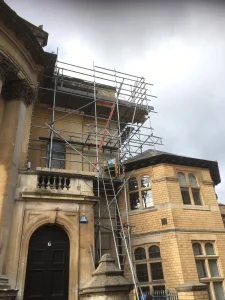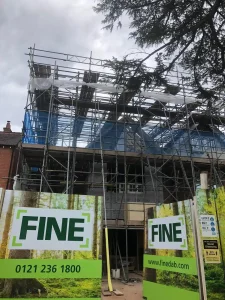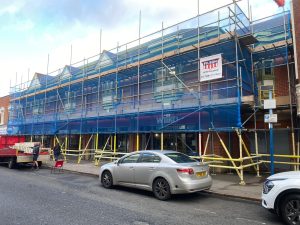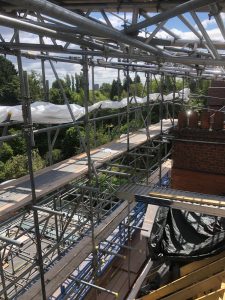
Fascia repair in Harborne. Quote’s done, van’s packed, crew’s ready. Then someone mentions a licence and the whole morning falls apart.
Does it apply here? Who sorts it? The homeowner shrugs. The contractor’s not sure either. That one unanswered question holds everything up, and it happens on sites across Birmingham every week.
Sometimes it stays awkward. Sometimes it gets worse. Jobs get reported, towers get pulled, fines land. None of it needed to happen.
Scaffold tower hire Birmingham isn’t the minefield people think it is. Most jobs are fine. No licence, no paperwork, no problem. But some do need one, and the line between the two is easier to read than most people realise.
This piece explains the rules clearly, so you can get the job done without a headache.
What Is Scaffold Tower Hire Birmingham and When Is It Used
A scaffold tower is a freestanding, mobile access structure. It’s not the same as full scaffolding, no ties to the building, no scaffolding poles running across your front elevation. You assemble it, you move it, you break it down.
Common Projects That Use Scaffold Towers
- Repainting exterior brickwork or soffits on a terraced house
- Maintenance work on retail shopfronts along Broad Street or Colmore Row
- Replacing guttering on a bungalow in Moseley or Kings Heath
- Accessing roof edges on extensions in Sutton Coldfield
- Interior work at height, warehouse ceiling repairs, and large commercial units
Short-duration jobs. That’s the pattern. If you’re on and off the structure in a matter of days, a tower usually makes more financial sense than full scaffolding.
Why Scaffold Towers Are Popular in Birmingham
Birmingham’s dense urban street pattern creates tight conditions. In Digbeth, the Jewellery Quarter, or along the terraced rows of Balsall Heath, there simply isn’t always room to run a full scaffold system. A tower fits where a full rig doesn’t.
Cost is the other factor. Scaffold tower hire is substantially cheaper than commissioning a full scaffolding build and strip. For retail businesses managing budgets tightly, and for homeowners doing one-off repairs, that difference matters.
Scaffolding in Birmingham also operates across a huge range of project types, from simple domestic repairs to complex commercial builds. The tower hire route suits the jobs at the smaller, faster end of that scale. It’s practical, it’s portable, and for the right job, it’s the smart choice.
Do You Need a Licence for Scaffold Tower Hire Birmingham
Here’s where the confusion usually starts. The short answer: it depends entirely on where the tower is placed, not on how tall it is or what kind of job you’re doing.
When You Do NOT Need a Licence
You don’t need any permission from Birmingham City Council or any highway authority when the scaffold tower is placed entirely on private land. That includes:
- Your own garden or driveway
- Private car parks
- The interior of a commercial building
- Courtyards, rear yards, or private access roads
If the public never encounters the structure, no pavement, no road, no right of way, you don’t need a licence. Full stop. This covers the majority of domestic jobs and a significant proportion of commercial work where access is off-street.
When You DO Need a Licence
The moment any part of the tower, or any protective barrier around it, occupies a public pavement, highway, or pedestrian route, a licence is required.
This catches more projects than people expect. Even a small overhang into a pavement in Edgbaston or a protective hoarding across a section of footway on Corporation Street requires permission.
Working on a shopfront in the city centre? Almost certainly needs a licence. Residential work in a street with a narrow pavement and no driveway? Check carefully. Key triggers for a licence requirement:
- A tower placed partly or fully on a public pavement
- Protective barriers or exclusion zones extending onto the highway
- Access restrictions affecting pedestrian flow
- Any part of the scaffold encroaching on a road surface
If you’re in any doubt, assume a licence is needed and verify before the tower goes up. The penalty for getting this wrong is not worth the time you’d save by skipping the check.
Who Issues the Licence in Birmingham
Birmingham City Council’s Highways department handles it. Depending on the work, you’ll need either a Section 74 or Section 171 licence under the Highways Act 1980. Your contractor should know which one applies.
Here’s what catches people out. The licence is the contractor’s responsibility, not yours as the homeowner or business owner. Most people assume the council contacts them directly. They don’t.
If you’ve hired scaffolding contractors in Birmingham to run the job, they sort the licence. Simple. But if you’ve hired the tower yourself with no contractor involved, that responsibility lands on you. Don’t leave it ambiguous. Ask who’s handling it before anything gets booked.
Licence Rules Explained Simply for Birmingham Projects
A licence isn’t just paperwork. It comes with real conditions attached. Ignore them, and you’re exposed.
Safety barriers: Anything placed on or near a highway needs proper barriers around it. They stop pedestrians from walking into the structure and keep people safe from anything falling above. No barriers, no compliant site.
Lighting: Evening work or anything visible to traffic needs lights on the barriers. It’s a highway requirement, not a suggestion. Sites in central Birmingham have been fined for skipping this. It’s one of the most common oversights.
Insurance: Public liability cover must be in place before the council issues a licence. They’ll ask to see it. Most scaffolding contractors in Birmingham carry this already. But if you’re hiring equipment yourself, check your own policy first. Don’t assume you’re covered.
A site manager I spoke to in Ladywood told me the licence process felt daunting the first time, but that a reputable scaffolding contractor took care of every element from submission to condition compliance. That’s what a good contractor relationship looks like.
What Happens If You Ignore Licence Rules
Consequences are real and immediate. Fixed penalty notices start at several hundred pounds for unlicensed occupation of the highway. Birmingham City Council’s highways enforcement team is active, particularly in the city centre and in residential zones with high pedestrian footfall.
Project shutdowns mean lost working days, rescheduled trades, and often additional hire costs while the licence is sorted retrospectively. On a tight commercial refurb, that disruption can easily cost more than the original licence fee.
Liability is the most serious concern. If an unlicensed structure causes an injury to a member of the public, the absence of a licence removes a significant layer of legal protection. The cost of that exposure far outweighs the cost of doing it correctly.
Scaffold Tower vs Full Scaffolding in Birmingham
The right access solution depends on the job. This table gives a quick comparison.
| Feature | Scaffold Tower | Full Scaffolding |
| Setup time | Quick (hours) | Longer (days) |
| Cost | Lower | Higher |
| Best for | Short-term, focused access | Large or complex projects |
| Licence needs | Situational (location-based) | More commonly required |
| Mobility | Can be repositioned | Fixed once erected |
| Load capacity | Limited | Higher |
For a scaffold Birmingham situation involving large-scale works, full elevations, long durations, complex access, a scaffold tower won’t be sufficient. Scaffolding contractors in Birmingham will steer you towards the right option after assessing the site. Never book based on cost alone; the wrong structure creates safety risks that no savings justify.
How to Stay Compliant When Hiring a Scaffold Tower in Birmingham
Simple Steps to Avoid Legal Trouble
Check the Location First
Before anything else, establish whether any part of the planned tower position touches public land. Walk the site. Look at the pavement width. Check whether your access zone would affect pedestrian flow.
Contact Birmingham City Council Highways
If there’s any chance a licence is needed, call the highways team before booking. They’ll tell you quickly whether an application is required and how long approval takes. In most cases, standard licence approvals in Birmingham take between 5 and 10 working days, longer for complex or high-footfall locations.
Work With Professionals Who Handle This Routinely
This is the most effective step. An experienced contractor manages licence applications as part of the job. They know the forms, the conditions, the contacts.
Why Choosing Experienced Scaffolding Contractors Matters
If you’ve never dealt with a highway licence before, it feels complicated. For a contractor working across Digbeth, Stirchley, and Solihull every week, it’s just Tuesday.
That experience matters. They know the forms, the conditions, and who to contact at the council. Permits, barriers, lighting, insurance, it all gets handled without you chasing it.
It also protects your timeline. One missed condition can stall a job for days. An experienced team spots those issues before they become problems.
Before going the hire-only route, explore the range of scaffold access services available for both domestic and commercial projects.
Why Businesses and Homeowners Trust Professional Scaffold Hire in Birmingham
One small compliance mistake can stop everything. Weeks of planning can fall apart fast. Lost time hurts. You pay for delays, idle workers, and storage. Costs climb quickly. Fixing mistakes costs more.
That’s why many choose proper support early. It keeps things moving. Less stress. Fewer surprises. Filson Scaffolding has worked across Birmingham since 1998. Their team handles homes, shops, and large sites. From Stirchley repairs to city centre jobs. Clients often mention one thing first. Clear communication.
They don’t just deliver equipment and leave. They keep you updated at each step. They flag issues early. That matters on busy streets. Access mistakes can affect the public. It needs careful planning. Experience shows here.
Filson Scaffolding covers domestic and commercial work. They also manage industrial and complex access setups. Licences and compliance get handled too. You stay focused on your project.
Conclusion
Scaffold tower hire Birmingham comes down to one thing: where does the tower go? Private land, no licence needed. Public pavement or road, get one first.
Most problems start when that question gets skipped. The tower arrives, someone flags it, and suddenly the job stops. That delay costs more than the licence ever would.
Private land? Crack on. Touching a pavement or highway? Sort the licence before anything goes up. Work with a contractor who handles that routinely; it saves time and removes the guesswork.
Filson Scaffolding takes care of the full process. Licence applications, barrier setup, installation, removal, all of it. We’ve been doing this across Birmingham for over 27 years.
Get in touch today for a quote or to talk through what your project needs.
Frequently Asked Questions
Do I always need permission for scaffold tower hire Birmingham?
Not always. Private land needs no licence. Public pavements or roads do. Location decides it.
Who is responsible for getting the licence in Birmingham?
Usually, your contractor handles it. If you’re hiring directly, it falls on you. Always confirm upfront.
How long does a scaffold licence take to approve in Birmingham?
Typically, 5 to 10 working days. City centre sites can take longer. Apply early, not at the last minute.
Can I place a scaffold tower on the pavement outside my property?
No, not without a licence. Pavements are public land. Permission is required regardless of your boundary.
What if the tower only partially extends onto the pavement?
Doesn’t matter. Any encroachment onto public land needs a licence. There’s no partial exception.