A scaffold fell on a busy road near Digbeth, B5, on a Tuesday morning. People were passing by. Work was still in progress. No clear warnings were in place.
The case is now being reviewed by the Health and Safety Executive. But it reflects bigger issues across many sites in Birmingham.
If you manage a site, pay attention. Small mistakes build up fast. Missed checks can lead to real harm. For any Scaffolding Company Birmingham, this is a clear reminder. Safety cannot wait. Planning must be tight. Supervision must stay active.
Here, we look at what may have gone wrong. We also cover common risks in busy areas. We also show what separates safe sites from risky ones.
What Happened in the Birmingham Scaffold Collapse
Key Facts from the Incident
The structure was approximately 40 metres in length. It came down in a public-facing area during active working hours. At least two pedestrians were caught near the collapse zone. An HSE investigation was launched immediately after.
This wasn’t a remote industrial site. It happened where people walk, shop, and move through the city every day.
Why This Incident Is Different
Most scaffold incidents occur away from public view. This one didn’t. That changes everything.
When a structure fails on a commercial street near B1, B2, or B3 postcode areas, the risk doesn’t stay on site. It spills out. Onto pavements. Into traffic. Onto people who had no idea work was happening overhead.
What This Reveals About Site Safety
Internal checks alone are not enough now. Sites sit close to busy streets. People walk past every day.
If your scaffold stands near Jewellery Quarter (B18) or Edgbaston (B15), you carry wider responsibility. What happens outside your site still matters. This is not just advice. It comes from the Work at Height Regulations 2005. The rules are clear.
The recent collapse shows a hard truth. Some teams move too fast. They miss risks around the public. That gap can lead to serious harm.
Why This Incident Raises Serious Questions for Any Scaffolding Company Birmingham
A collapse of this scale in a pedestrianised area raises three questions. They apply to every project in the city, not just this one.
Are Safety Checks Being Carried Out Properly?
HSE guidance is clear. Scaffolding must be inspected by a competent person before first use, after any substantial alteration, and after any event likely to affect its stability.
That’s a minimum standard. Not a high bar. When a structure falls onto a public street, the inspection record, or lack of one, becomes exhibit A.
Is Public Protection Being Prioritised?
Barriers and exclusion zones exist for a reason. They’re not optional extras. But a barrier poorly positioned, or a zone that’s quietly shrunk over time to keep a pavement passable, is not the same as real public protection.
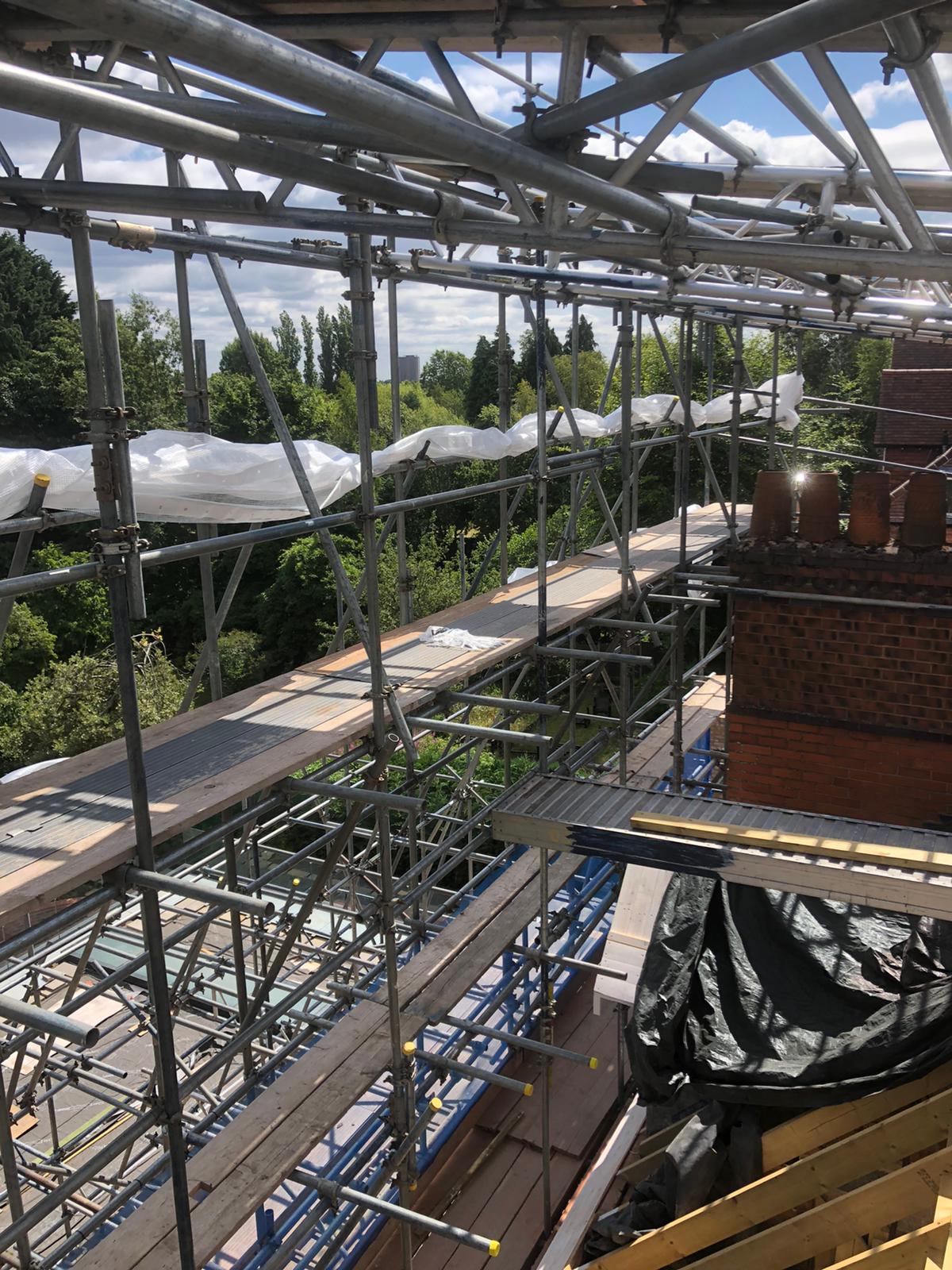
In the New Street collapse, the sheeting was left on the scaffold during dismantling work. Wind load on sheeting adds force. Force on an improperly tied structure means collapse. That’s not bad luck. That’s a process failure.
Are Scaffolds Designed for Real-World Conditions?
City centre conditions are not controlled environments. Wind channels between buildings. Deliveries disturb barrier lines. Foot traffic builds up against hoarding.
A scaffold designed for a quiet industrial estate won’t behave the same way on Corporation Street. It needs to be engineered for where it actually is.
Common Risks Linked to Scaffolding in Birmingham Projects
Birmingham is one of the UK’s most active construction cities. Crane counts in the city centre have broken records repeatedly in recent years. More buildings mean more scaffolds. More scaffold means more risk, unless it’s managed properly.
Weather and Environmental Exposure
Wind loads in urban corridors are unpredictable. The gap between the Octagon tower development near B1 and the older Victorian streetscape creates funnelling. Scaffolding with sheeting still attached during dismantling, exactly what happened in the New Street collapse, is particularly vulnerable.
Poor Installation or Rushed Timelines
Programme pressure is real on new build scaffolding Birmingham projects. HS2 works, Curzon Wharf, and Smithfield regeneration are all creating tight delivery windows across the city.
Rushed installation creates risk. Skipped steps during erection don’t become visible until something moves.
Lack of Routine Inspections
An inspection done once at handover and never repeated isn’t an inspection regime. It’s a formality.
A site manager we spoke to working near Selly Oak B29 told me he’d taken over a project where the previous contractor hadn’t logged a single scaffold inspection in six weeks. The structure was still standing. But three fittings were already loose.
High Foot Traffic Near Sites
Digbeth B5 and the Jewellery Quarter B18 are mixed-use zones. Pedestrians, cyclists, delivery vehicles, and site traffic share the same narrow streets. One gap in your barrier setup is enough.
Comparing Safe vs Unsafe Scaffold Practices
The difference isn’t always visible from the street. But it shows up in outcomes.
| Factor | Safe Practice | Unsafe Practice |
| Installation | Planned, engineered, site-specific | Rushed, template setup |
| Inspections | Regular, documented, walked | Logged on paper, rarely checked |
| Public Safety | Clear barriers, exclusion zones | Open exposure near walkways |
| Load Handling | Calculated within design limits | Estimated, often exceeded |
| Supervision | Qualified, on-site oversight | Minimal or absent |
The unsafe column doesn’t look dangerous from a distance. That’s the problem. One project running on the unsafe side of that table is a liability. For your client. For your site. For anyone walking past.
How New Build Scaffolding Birmingham Projects Can Reduce These Risks
Prevention starts before the first tube goes up. Most site teams bring in scaffolding too late in the planning process.
Importance of Early Planning
New build scaffolding Birmingham projects that plan access from the design stage avoid the most common failures. The scaffold isn’t an add-on. It’s infrastructure.
When you know the structure before groundworks begin, you can account for wind exposure, load points, and pedestrian flow in advance, not as a reaction.
Integrating Safety Into the Design Stage
Every scaffold should have a documented design. Not a general-purpose plan adapted on the fly. A design specific to your site, your height, your ground conditions, and your public exposure. That document protects you legally. It also protects the people on and around your site.
Controlled Site Access and Pedestrian Management
This is where most Birmingham city projects fall short. Pedestrian routes shift as builds progress. Barriers move. Signage disappears after the first week.
You need a plan that updates as the project moves, not one written on day one and forgotten.
Filson Scaffolding approaches every site with a phased access plan built into the project schedule. It’s not extra work. It’s how you avoid the alternative.
The Collapse Is a Warning. Are You Listening?
The Birmingham incident isn’t an outlier. It’s a signal. Sites across Birmingham are operating under the same pressures that contributed to that collapse: tight timelines, public exposure, variable weather, and inspection gaps. None of that is unique to one site.
If you’re working with a scaffolding company Birmingham, you need to know how they inspect, how they design for your conditions, and how they manage the public risk your project creates.
Filson Scaffolding has worked across Birmingham since 1998. We don’t cut corners on inspections. We don’t use generic designs on complex sites. And we don’t treat public protection as optional.
The question after a scaffold collapse isn’t just who was responsible. It’s who you want managing the risk on your site. Choose carefully.
Frequently Asked Questions
What caused the Birmingham scaffold collapse?
Most collapses come from basic failures. Poor setup. Weak ties. Missed checks. Wind or uneven loads can push structures past safe limits.
How can scaffolding risks be reduced?
Good planning makes a big difference. Check the design first. Inspect often. Follow clear rules. Train workers well. Fix issues early.
Is scaffolding dangerous to the public?
It can be, especially in busy streets. Loose parts may fall. Whole sections can fail. Pedestrians and nearby buildings face real risk.
Who is responsible for scaffold safety?
Responsibility is shared across the site. The scaffolding team, site manager, and main contractor must work together and keep safety standards high.
What should I look for in a scaffolding company Birmingham?
Choose a Scaffolding Company Birmingham with strong safety habits. They should inspect often, plan well, and protect both workers and the public.