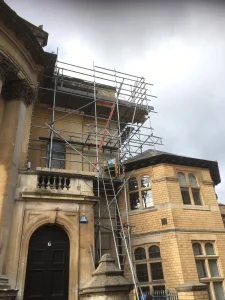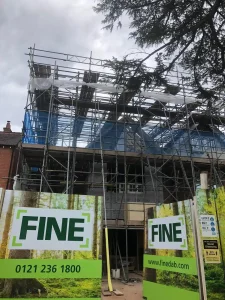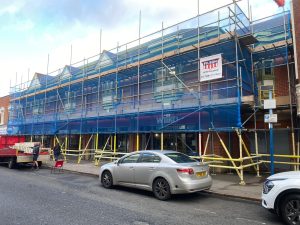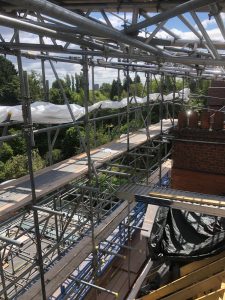
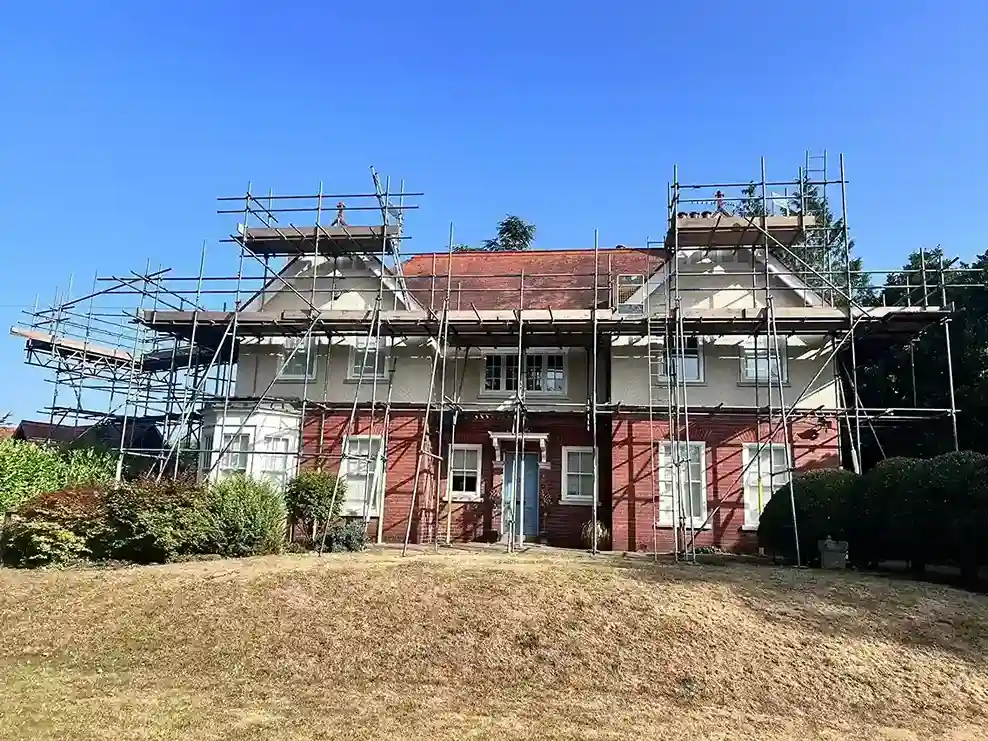
The development corridor running through Digbeth B5 into Birmingham City Centre B1. This is one of the busiest in the Midlands. Cranes up. Contractors under pressure. Deadlines that don’t move.
Most scaffolding accidents don’t look dramatic before they happen. There’s no warning sign. A guardrail gets skipped. A worker gets sent up with no instructions. Seven feet later, a life changes.
Commercial scaffolding Birmingham sites carry real risk, and that risk grows when planning, training, and fall protection get treated as afterthoughts.
This blog covers the mistakes that cause the most damage on Birmingham sites, a real incident heard at a local court, and what proper safety practice actually looks like in action.
Table of Contents
Why Commercial Scaffolding Birmingham Projects Demand Strict Safety Standards
High-Risk Environments in Commercial Builds
Commercial sites are messy. Jewellery Quarter B18, Edgbaston B15, groundworkers, electricians, bricklayers, and scaffolders all sharing the same space.
Nobody’s fully in charge. One trade assumes another checked the scaffold. Neither did. Deadlines make it worse.
Handing over a scaffold even two hours early pushes contractors to skip checks. That’s when things go wrong. A site manager I spoke to in Digbeth told me, “Everyone thinks someone else signed it off.”
Legal and Financial Consequences of Mistakes
The Work at Height Regulations 2005 need proper planning and supervision from the employer. Breaching them brings fines, improvement notices, and in serious cases, prosecution.
A fine at magistrates’ court can reach £20,000 per offence. The Crown Court carries unlimited fines. Project shutdowns add days or weeks of lost revenue on top of legal costs.
That’s before you factor in insurance claims, civil action from injured workers, and damage to the contractor reputation. One incident. Multiple consequences.
Public Safety Risks in Urban Birmingham Sites
Sites in Birmingham City Centre, B2, B3, or along the A38 corridor sit next to live pedestrian routes. A scaffold failure doesn’t only put workers at risk.
Falling materials on a public footpath is a criminal matter. Reputational fallout follows fast, especially when incidents reach local press.
Urban scaffold Birmingham work demands a higher standard of protection. Not because the law requires it. Because the exposure demands it.
The Most Dangerous Mistakes That Lead to Scaffolding Accidents
Most scaffolding accidents on commercial sites trace back to the same small group of failures. They’re not exotic or unusual. They’re the gaps that open up when speed trumps process.
| Mistake | Root Cause | Consequence |
| No risk assessment | Work starts without planning | Uncontrolled fall hazards |
| Missing edge protection | Guardrails skipped for speed | Falls from height |
| Untrained worker sent up | No supervision or instruction | Injury, prosecution |
| No scaffold inspection | Assumed safe after first check | Structural failure |
| Weather damage ignored | Rain or wind effects overlooked | Collapse risk |
Poor Planning Before Scaffold Installation
A risk assessment isn’t a form to fill in and file. It’s a live document that shapes how you build, position, and load a scaffold.
Without one, load calculations get skipped. Anchors often get positioned based on judgement rather than proper planning. And when something fails, there’s no baseline to work from. Planning gaps are the single most common root cause in HSE prosecutions.
Missing Fall Protection Measures
Guardrails, toe boards, and safe access points aren’t optional extras. Under the Work at Height Regulations 2005, employers must put collective fall prevention in place wherever possible.
Gaps in edge protection are the most frequently cited deficiency in HSE site inspections. One missing guardrail on a scaffold Birmingham site is one too many.
Inadequate Worker Training and Supervision
A site manager I spoke to in Selly Oak B29 told me: “We had a new labourer sent up to check a platform on his second day. No one told him what to look for. He didn’t know what unsafe even looked like.”
That’s not an unusual story. Workers get put in unsafe positions because someone assumes the job is simple. Simple jobs are often where the worst injuries happen.
Ignoring Regular Inspections
Scaffolds must be inspected after installation, after any event that could affect stability, and at least every seven days thereafter. The weather affects scaffolds fast.
A wet weekend in Birmingham can shift base plates, loosen couplers, and load sheeting beyond design capacity. An inspection isn’t a formality. It’s the check that catches what daily routine misses.
A Real Incident in Birmingham That Highlights the Risk
What Happened on Site
Hednesford, August 2024. A worker arrived to replace guttering on a domestic property. No instructions. No fall protection. Nothing to stop him from going straight over the edge.
He fell seven feet. Four fractures: shoulder, upper arm, eye socket, nose. One fall. One job nobody thought needed a safety plan.
What Went Wrong
HSE investigated and found three distinct failures. Goliath Home World Limited didn’t plan the work at height. They didn’t install any fall prevention measures.
They gave the worker no instruction before he climbed. Not one failure. All three. Each one alone was enough to bring a prosecution.
Outcome and Legal Action
The case was heard at Birmingham Magistrates’ Court in November 2025. Goliath Home World Limited was fined £16,500 plus costs, a direct result of sending a worker up without a single safety measure in place.
That fine doesn’t include the civil claim exposure, the insurance impact, or the reputational damage that follows an HSE prosecution record. For the full case details, read the HSE prosecution notice.
The Key Lesson for Commercial Scaffolding Projects
This was a domestic guttering job. The failures that caused it happen on commercial scaffolding Birmingham sites too, just with higher stakes.
Familiar jobs get skipped. Small jobs get skipped. That’s where the injuries are.
Every job at height needs a risk assessment, fall protection, and a worker who’s been told what safe looks like before they go up. Size doesn’t change that. Neither does familiarity.
How Professional Scaffolding in Birmingham Reduces Risk
Proper Design and Load Management
Good scaffolding starts on paper, not on site. Before anything goes up, load limits, wind exposure, and anchor points need working out.
Urban sites make this harder. Digbeth B5 and the A34 corridor have tight footprints and unpredictable ground conditions. Nearby buildings affect how a structure behaves under load.
Assume nothing. Assess everything. That’s what separates a safe scaffold from a problem waiting to happen.
Safe Installation and Dismantling Practices
Both phases carry serious risk. Trained scaffolders work in a set sequence. No guessing. No cutting corners.
CISRS is the UK’s scaffolding qualification. It means your scaffolder sat an assessment and passed. Not just experienced, verified.
That distinction matters on commercial sites. Heights are greater. Loads are heavier. One wrong move during installation or strip-down can hurt someone fast.
Regular Inspections and Compliance Checks
A scaffold that passed inspection on Monday isn’t automatically safe on Friday. Weather, ground movement, and trades working around the structure all create change.
Professional scaffold Birmingham contractors build inspection into their programme. Not as an add-on. As part of the job.
Choosing the Right Scaffold Birmingham Partner for Safer Projects
Experience in Commercial and Industrial Scaffolding Birmingham
Industrial scaffolding Birmingham work demands contractors who’ve handled complex sites, multi-storey builds, occupied buildings, and restricted access zones. Check our services to understand what experience on commercial and industrial sites actually looks like in practice.
Ask for examples of similar projects. Ask how they managed public protection. Ask what their inspection schedule looks like. If you don’t get clear answers, that tells you something.
Capability Across Residential Scaffolding Birmingham Projects
A contractor with experience across residential scaffolding Birmingham projects brings flexibility. Domestic sites teach tight access, neighbour management, and working within confined footprints. That experience transfers to commercial sites. The discipline doesn’t change. Only the scale does.
Clear Communication and Site Coordination
Miscommunication between scaffold contractors and other trades is a recurring factor in site incidents. Roles blur. Assumptions get made. Nobody checks.
A good scaffold Birmingham contractor keeps communication structured, site-specific handovers, written inspection records, and clear contact points when conditions change. That structure reduces the gaps where mistakes happen.
Mistakes Are Preventable. The Consequences Are Not.
Birmingham isn’t slowing down. Edgbaston B15, Birmingham City Centre B3, Digbeth B5, buildings are running hard. So is the pressure to cut corners.
Commercial scaffolding Birmingham incidents don’t come from bad luck. Planning gets skipped. Training gets skipped. Someone decides the job’s too small to bother with a safety plan.
That decision has a price. Birmingham Magistrates’ Court heard it in November 2025. A worker left with permanent injuries. A company fined £16,500. A record that doesn’t go away.
It started with one unplanned job. Sound familiar? If your site runs any work at height, the contractor you pick matters. Choose one who plans properly, uses trained scaffolders, and actually carries out inspections.
Filson Scaffolding has handled commercial, industrial, and residential projects across Birmingham since 1998. Same standards. Every project. No exceptions.
Frequently Asked Questions
What are the most common scaffolding mistakes on commercial sites?
Skipping risk assessments, missing guardrails, sending untrained workers up, and ignoring inspections. These four mistakes appear repeatedly in HSE prosecutions across UK commercial sites.
Why is commercial scaffolding Birmingham considered high risk?
Multiple trades share tight spaces. Deadlines push shortcuts. Public footfall adds pressure. Birmingham City Centre and Digbeth sites leave little room for error.
How can scaffolding accidents be prevented?
Plan the job properly before work starts. Use trained scaffolders. Check the structure every seven days. After bad weather, inspect again before anyone goes up.
Is scaffolding in Birmingham regulated?
Yes. The Work at Height Regulations 2005 cover all UK sites. Employers must plan and supervise every job safely. HSE actively inspects Birmingham construction sites.
What should I look for in a scaffold Birmingham company?
Check they hold CISRS qualifications. Ask about their inspection process. A good contractor questions your site before quoting. No questions asked means walk away.